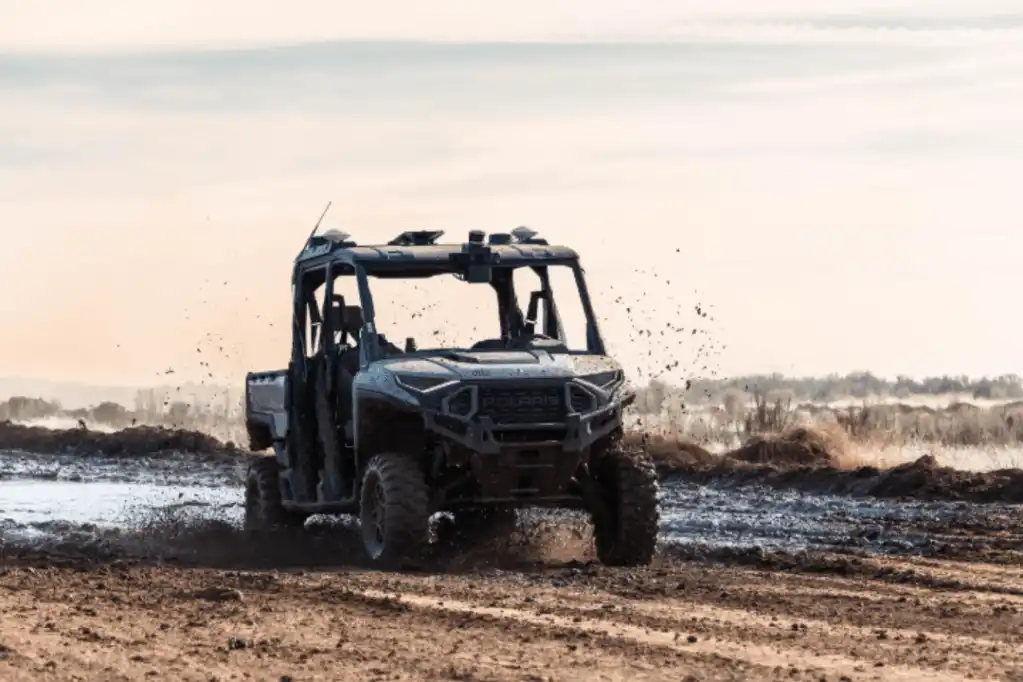
Autonomous ground vehicles are playing a crucial role in the Ukraine conflict, with over 100 US-built vehicles deployed in combat zones for the past nine months. These vehicles, developed by Forterra, are enhancing logistics and casualty evacuation, marking a significant milestone in the adoption of autonomous technology in warfare.
How Autonomous Ground Vehicles Are Transforming Warfare
Forterra's Lancer vehicles, based on Polaris ATVs, are equipped with a custom-built sensor and compute stack, enabling them to navigate challenging terrain autonomously. With a cargo capacity of 750 kilograms, they are significantly more versatile than Ukraine's existing battery-powered uncrewed ground vehicles (UGVs), which can only carry up to 250 kilograms.
The vehicles have driven over 2,500 miles across more than 1,100 missions, carrying a total weight of 777,440 pounds and completing 52 casualty evacuations. Key specs of Forterra's Lancer vehicles include:
- Gas-powered engine
- 750 kg cargo capacity
- Custom-built sensor and compute stack
- Starlink satellite internet antenna for enhanced connectivity
Overcoming Challenges and Limitations
While the vehicles have shown significant promise, they are not without limitations. Ukrainian soldiers have primarily been teleoperating the vehicles in combat zones due to their high value and the need for human oversight. Forterra is working to address these limitations by combining algorithms used in self-driving cars with generative AI software, enabling machines to react to their surroundings more effectively.
The company is not alone in this effort, with competitors like Scout AI, Field AI, and Overland AI also developing autonomous platforms for the military. As the technology continues to evolve, we can expect to see increased adoption and more sophisticated capabilities.
What's Next for Autonomous Ground Vehicles
As the Ukraine conflict continues to drive innovation in autonomous technology, we can expect to see further advancements in the coming months and years. With the US military investing heavily in these technologies, we are likely to see increased adoption and deployment in various theaters. Experts believe that ground autonomy is now achievable, and companies like Forterra are well-positioned to capitalize on this trend.