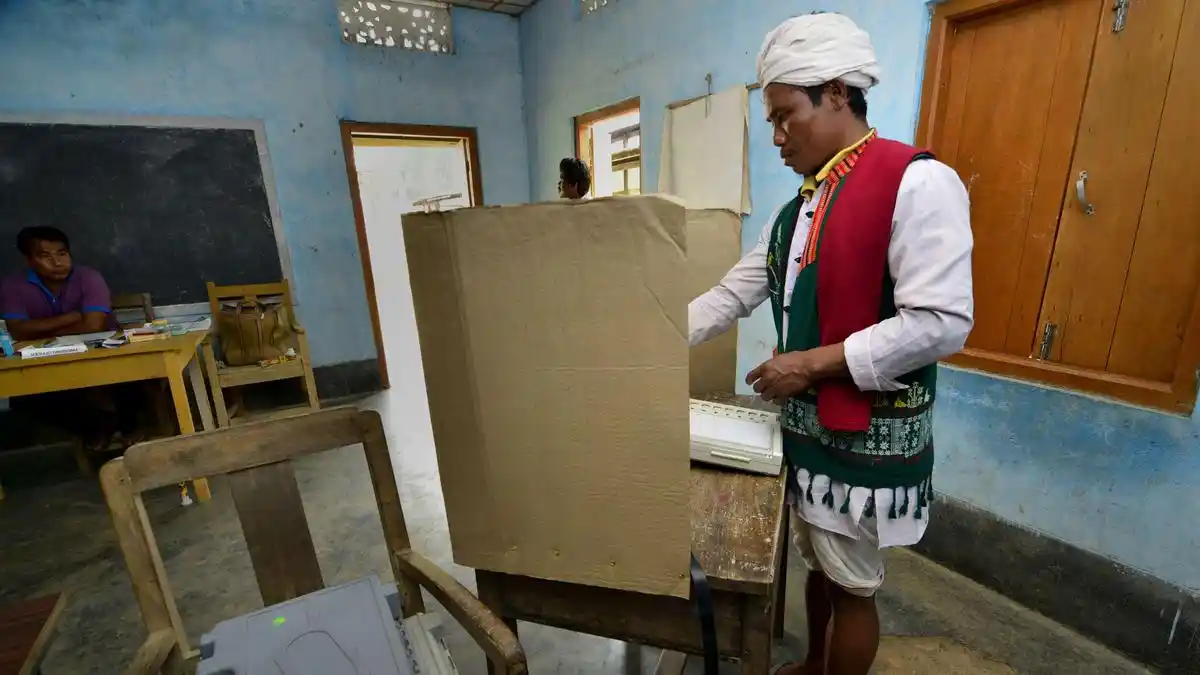
The Supreme Court of India is re-evaluating the status of voting as a fundamental right, a debate revived by a Congress leader's recent demand. For over seven decades, the Court has maintained that voting is a statutory right, not a fundamental one.
The Evolution of Electoral Jurisprudence
The Court's stance on voting rights has been shaped by landmark decisions that have transformed the voter from a passive statutory entity to an active constitutional actor. In Union of India vs Association for Democratic Reforms (2002), the Court established that voters have the right to know candidates' criminal backgrounds, educational qualifications, and financial assets, citing the fundamental right to freedom of speech and expression under Article 19(1)(a).
Subsequent judgments have further expanded the constitutional protections surrounding voting. The Court has recognized the freedom to make an informed choice and the secrecy of the ballot as fundamental rights. The NOTA judgment (2013) also protected voters' decisions to reject all candidates as a form of political expression.
The Anomaly in Constitutional Protection
This has created a paradox: while the act of voting remains a statutory right, many of its essential aspects are now constitutionally protected. The Court's recent decisions, including Anoop Baranwal vs Union of India (2023), have referred to voting as a constitutional right, marking a shift in judicial understanding.
The basic structure doctrine, established in Kesavananda Bharati vs State of Kerala (1973), holds that democracy is a fundamental aspect of the Constitution. Given that democracy operates through elections and citizen participation, it is argued that the right to vote should be constitutionally recognized. Article 326 of the Constitution mandates universal adult suffrage, entitling citizens to be registered as electors.
- The Representation of the People Acts operationalize this constitutional command.
- Exclusion from electoral rolls, except under constitutionally permissible limitations, infringes upon a constitutional guarantee.
The distinction between statutory and constitutional rights may have been relevant in the early years of the Republic, but the Court's decisions have blurred this line. As democracy and free elections form the basic structure of the Constitution, the citizen's vote cannot remain a constitutional orphan.