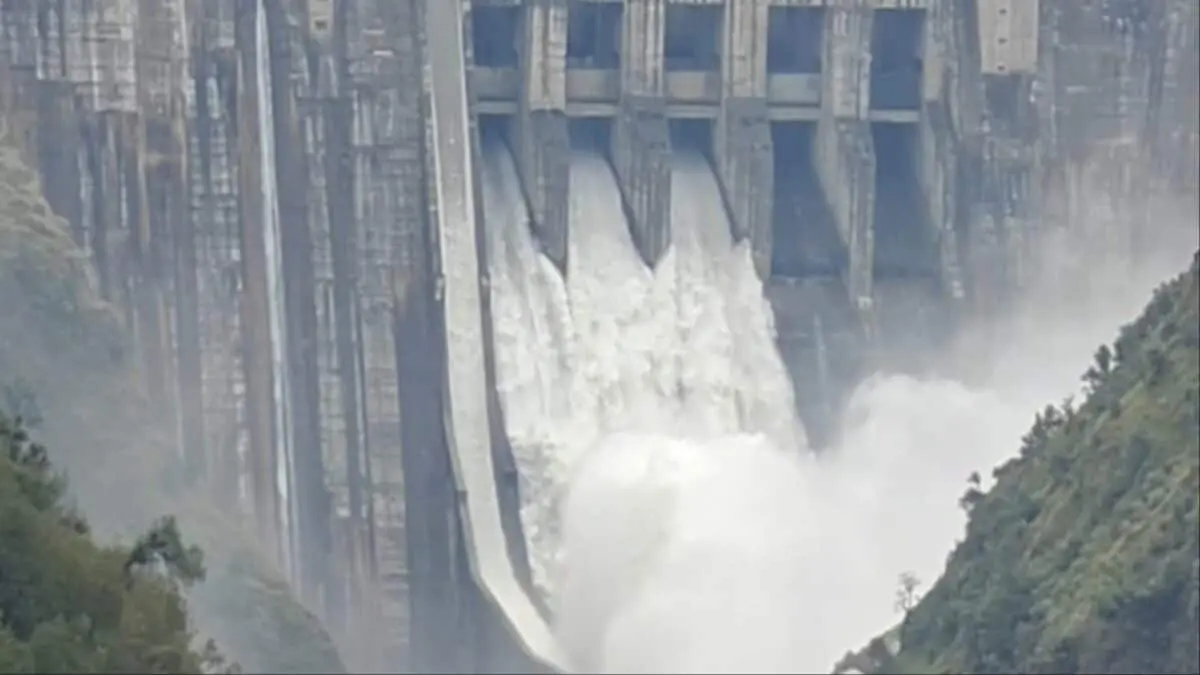
India opened three gates of the Baglihar Dam on the Chenab River in Jammu and Kashmir's Ramban district on Monday after heavy rainfall in the Doda-Kishtwar region caused a significant rise in water levels. The development comes as New Delhi reiterated its stance on the Indus Waters Treaty with Pakistan.
Background on Baglihar Dam and Indus Waters Treaty
The Baglihar Hydroelectric Power Project, located on the Chenab River, plays a crucial role in hydroelectric power generation and water regulation in Jammu and Kashmir. The Indus Waters Treaty, signed between India and Pakistan in 1960, governs the sharing of waters of the Indus river system, with India having exclusive rights over the eastern rivers and Pakistan receiving the waters of the western rivers, including the Chenab.
Rising Water Levels and Dam Operations
Authorities released water from the Baglihar Dam after heavy inflows into the Chenab prompted the opening of three gates, according to news agency ANI. The administration is continuously monitoring weather conditions and river flow, with all concerned departments remaining on alert to respond to any emergency situation.
The Ministry of External Affairs (MEA) spokesperson Randhir Jaiswal reiterated India's position on the Indus Waters Treaty during the weekly media briefing on Friday, stating that the treaty "stands in abeyance in response to Pakistan's continued sponsorship of cross-border terrorism."
Implications and Next Steps
India's decision to keep the Indus Waters Treaty in abeyance is linked to Pakistan's support for cross-border terrorism, as stated by the MEA. The situation remains under close observation, with the administration prepared to respond to any further developments.
- The Baglihar Dam is a significant hydroelectric power project on the Chenab River.
- India and Pakistan signed the Indus Waters Treaty in 1960 to govern the sharing of Indus river system waters.
- The treaty allows India to use the western rivers for domestic purposes and run-of-the-river hydroelectric projects.