Gujarat High Court upholds death sentences for 38, life for 11 in 2008 Ahmedabad serial blasts case, affirming IM members' conviction.
The Gujarat High Court on Tuesday upheld the death sentences of 38 convicts and life imprisonment awarded to 11 others in the 2008 Ahmedabad serial blasts case, affirming the verdict of a special court that had convicted members of the terror outfit Indian Mujahideen (IM).
A division bench of Justices A.Y. Kogje and Samir Dave dismissed all appeals filed by the convicts against the 2022 special court judgment, thereby confirming the sentences.
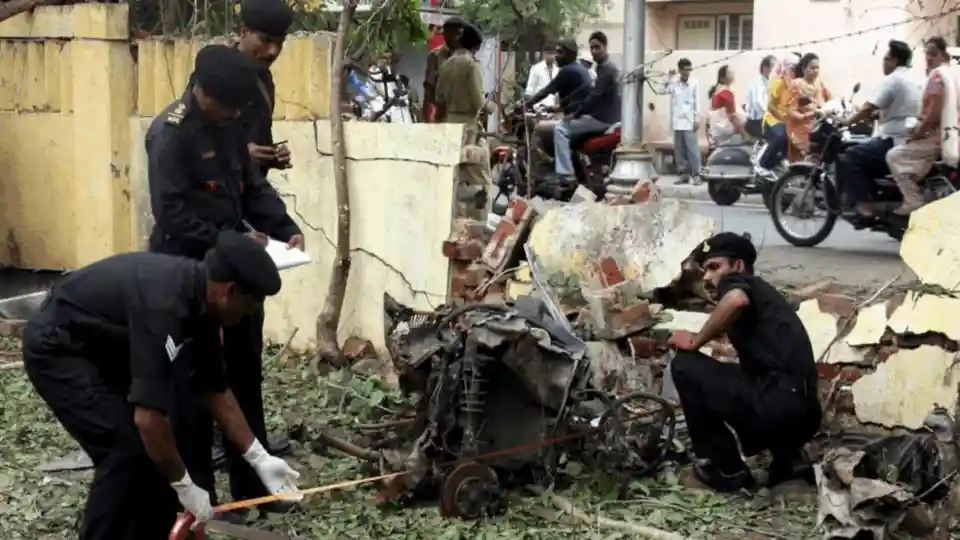
The case relates to the serial bomb blasts that rocked Ahmedabad on July 26, 2008, when 21 explosions ripped through different parts of the city within a span of 70 minutes. The attacks claimed 56 lives and left more than 200 people injured. Several hospitals treating the blast victims were also targeted.
In February 2022, a special court sentenced 38 convicts to death and 11 others to life imprisonment, describing the case as falling under the “rarest of rare" category. The convicts later challenged the verdict before the Gujarat High Court.
With Tuesday’s ruling, the High Court upheld the sentences awarded to all the convicts, rejecting their appeals and affirming the lower court’s findings against the Indian Mujahideen members in the case.
The judgment marks a significant development in one of India’s deadliest terror cases, nearly 18 years after the coordinated bombings shook Gujarat’s largest city.
The 2008 Ahmedabad Serial Blasts
The Ahmedabad serial blasts took place on July 26, 2008, a day after coordinated bomb explosions struck Bengaluru. In Ahmedabad, 21 low-intensity bombs exploded across 14 locations over nearly an hour, beginning around 6:45 pm. The attacks killed 56 people and injured more than 200.
Among the locations targeted were Maninagar, Raipur, Bapunagar, Hatkeshwar Circle, Sarkhej, Thakkarbapa Nagar, Khadia, Sarangpur, Jawahar Chowk, Isanpur, Govindwadi and Narol, as well as the Ahmedabad Civil Hospital. Two hospitals treating the injured were also targeted in the coordinated attacks.
According to investigators, the conspiracy behind the bombings was hatched during a clandestine training camp organised by the banned Students Islamic Movement of India (SIMI) in December 2007 in Kerala’s Ernakulam district. The camp, allegedly led by SIMI chief Safdar Nagori, was attended by around 50 participants from several states, including Gujarat, who underwent arms and physical training.
Just minutes before the first explosion, an email claiming responsibility and warning of the attacks was sent to several media organisations.
The banned terror outfit Indian Mujahideen (IM) later claimed responsibility for the bombings, describing them as “revenge for the 2002 Gujarat riots."
Witnesses near the blast sites reported being temporarily unable to hear because of the intensity of the explosions.
The case also witnessed a dramatic development during the trial, when 24 accused allegedly attempted to escape from prison by digging a 213-foot tunnel, a plot that was foiled before they could flee.