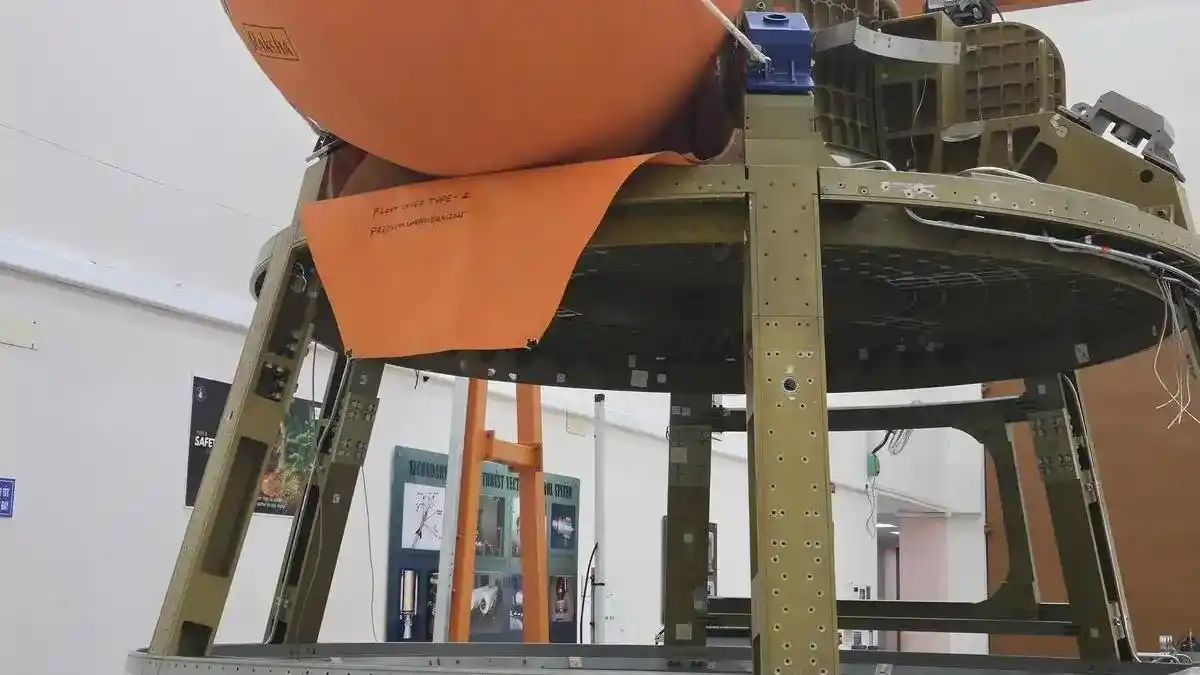
ISRO has successfully conducted three pivotal tests for its Gaganyaan mission, validating critical crew safety systems ahead of India’s first human spaceflight. The milestones include uprighting, umbilical separation, and structural integrity checks—key to ensuring astronaut survival during re-entry and splashdown.
Crew Module Uprighting System (CMUS) Validation
The first test confirmed the crew module’s ability to self-right after ocean landing, a non-negotiable safety requirement. ISRO deployed a stored cold-gas-based uprighting system, with a full-scale CMUS setup demonstrating successful inflation of flotation modules via high-pressure gas release and valve operation.
Umbilical Separation and Structural Stability
ISRO also verified the separation of the umbilical mechanism linking the crew and service modules. The test involved:
- Clean separation of CSU-2 (service module side) from a simulated crew module
- Structural stability of the crew module panel and interfaces post-separation
This ensures the crew module can safely detach during re-entry phases.
Apex Cover Separation: Parachute Protection
The third test validated the crew module’s structural integrity during apex cover separation. The apex cover shields parachutes and subsystems until deployment, with its removal confirmed as stable ahead of deceleration sequences.
These tests mark concrete progress for India’s Gaganyaan mission, addressing technical hurdles that directly impact mission feasibility and investor confidence in ISRO’s long-term space ambitions.


