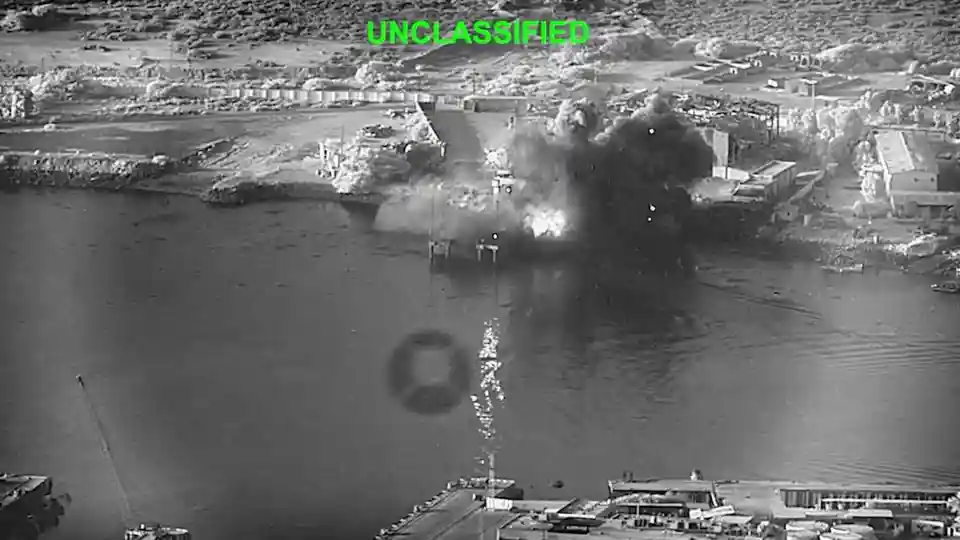
The U.S. military carried out a third consecutive night of strikes on Iran, targeting military sites in Bushehr, Chah Bahar, Jask, Konarak, Abu Musa, and Bandar Abbas, according to U.S. Central Command. The five-hour operation marks a new escalation in hostilities, even as President Donald Trump stated a deal with Tehran remains possible.
Iran Retaliates with Attacks on Bahrain and Strait of Hormuz
Iran’s Revolutionary Guards launched missile and drone strikes on Bahrain, hitting U.S. military facilities and weapons warehouses. Bahrain activated missile alert sirens as the attacks unfolded.
In the Strait of Hormuz, Iran disabled two "offending supertankers" and warned that cooperation with the U.S. would delay the waterway’s reopening, risking a global energy crisis. The UAE reported Iranian cruise missiles struck two Emirati oil tankers, killing one Indian crew member and wounding eight others.
Diplomatic and Economic Fallout
Iraqi Prime Minister Ali al-Zaidi met with Trump in Washington amid U.S. pressure on Baghdad to reduce Iranian influence. The visit underscores Iraq’s precarious position between its two allies.
Oil prices surged over 9% following the strikes. Brazilian President Lula da Silva criticized Trump’s proposal to impose a 20% fee on ships transiting the Strait of Hormuz, calling it "piracy." Trump had earlier pledged to reinstate a blockade on Iranian ports.
What to Watch Next
Further military exchanges are likely as both sides maintain hardened positions. The Strait of Hormuz remains a flashpoint, with global energy markets closely monitoring developments.